UMBC.edu Rebuild
Platform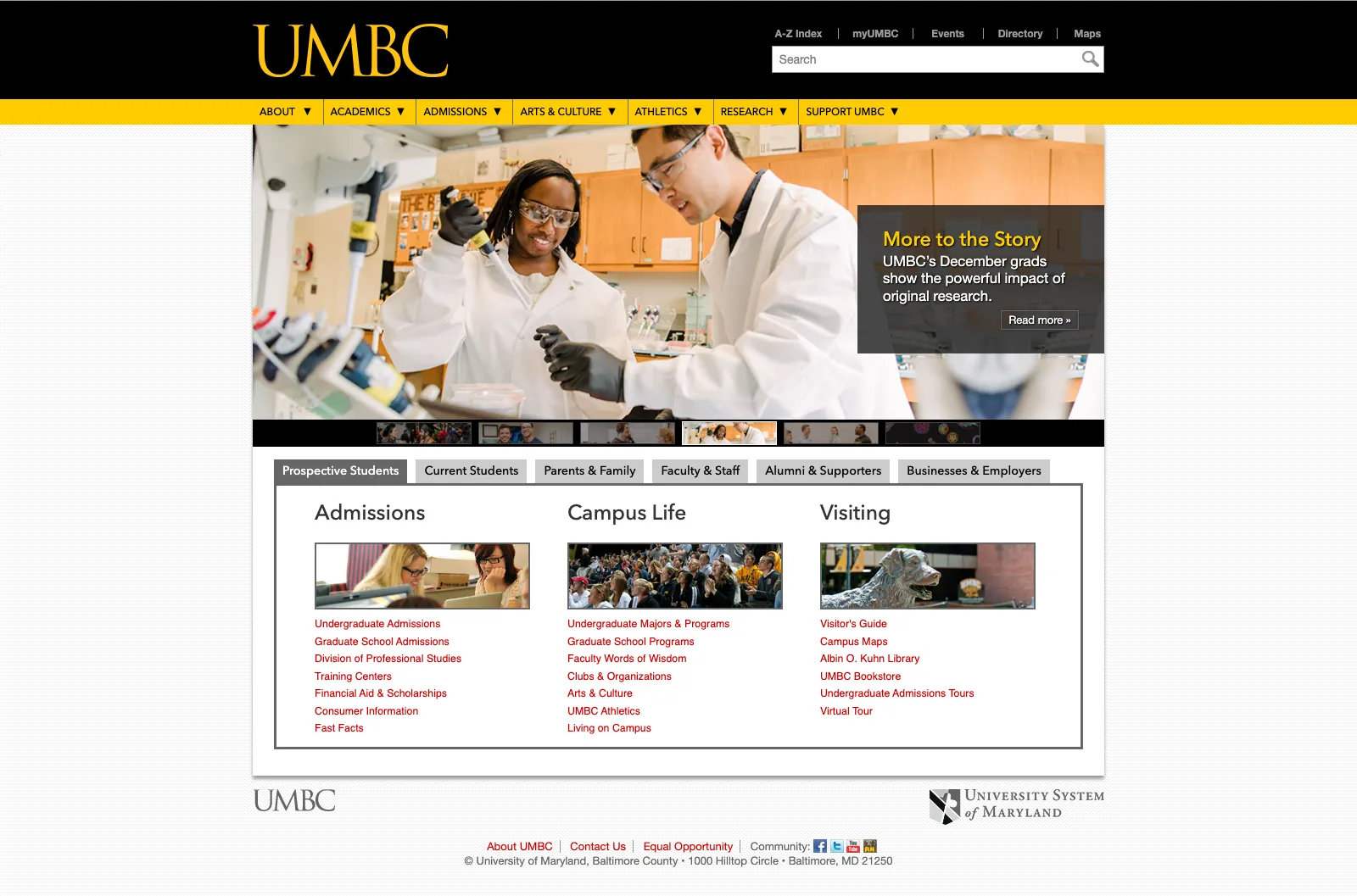

The Problem
UMBC.edu was a single PHP homepage that functioned as a link farm, pointing visitors out to hundreds of scattered subdomains and microsites, some dating back to the 1990s. Content was fragmented across 550+ subdomains with no consistent design, no shared navigation, and no central content management. Departments had no easy way to keep their web presence current. The result was a digital experience that didn't reflect the university's quality.
What I Built
I rebuilt UMBC.edu as a unified WordPress platform on Pantheon with a custom theme and custom plugins that I developed. The project involved:
- Migrating 19 legacy sites into the new platform
- Consolidating 7,000+ posts and 300+ pages into a coherent content architecture
- Auditing 550 scattered subdomains with the Library and DoIT, archiving SEO-rich legacy content with rank-preserving redirects
- Co-managing, with IT, the separate WordPress Multisite that runs nearly 600 department sites, where departments own their own content
- Designing a plain-language taxonomy ("Area of Study") that allows multi-category assignments across content
Results
7,000+
Posts migrated
300+
Pages
~600
Department sites on the Multisite
The strategy was to build out UMBC.edu so it answers about 90% of what our audiences come looking for, and send the other 10% to department sites. The platform replaced a fragmented web presence with a single, managed system. Departments can maintain their own content within a consistent design and navigation framework. Nineteen legacy sites were consolidated, with rank-preserving redirects for legacy content.